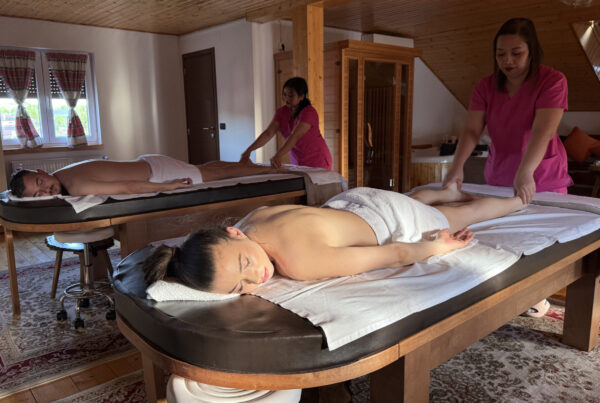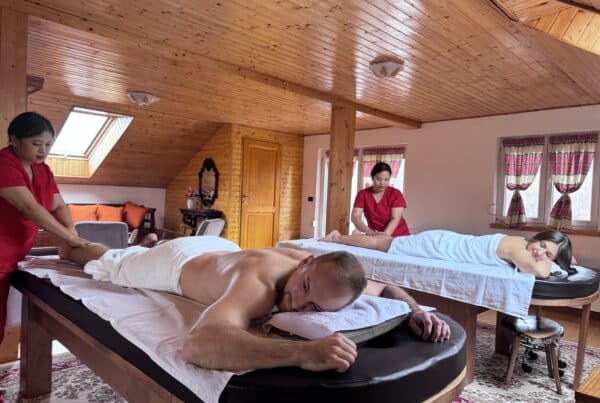

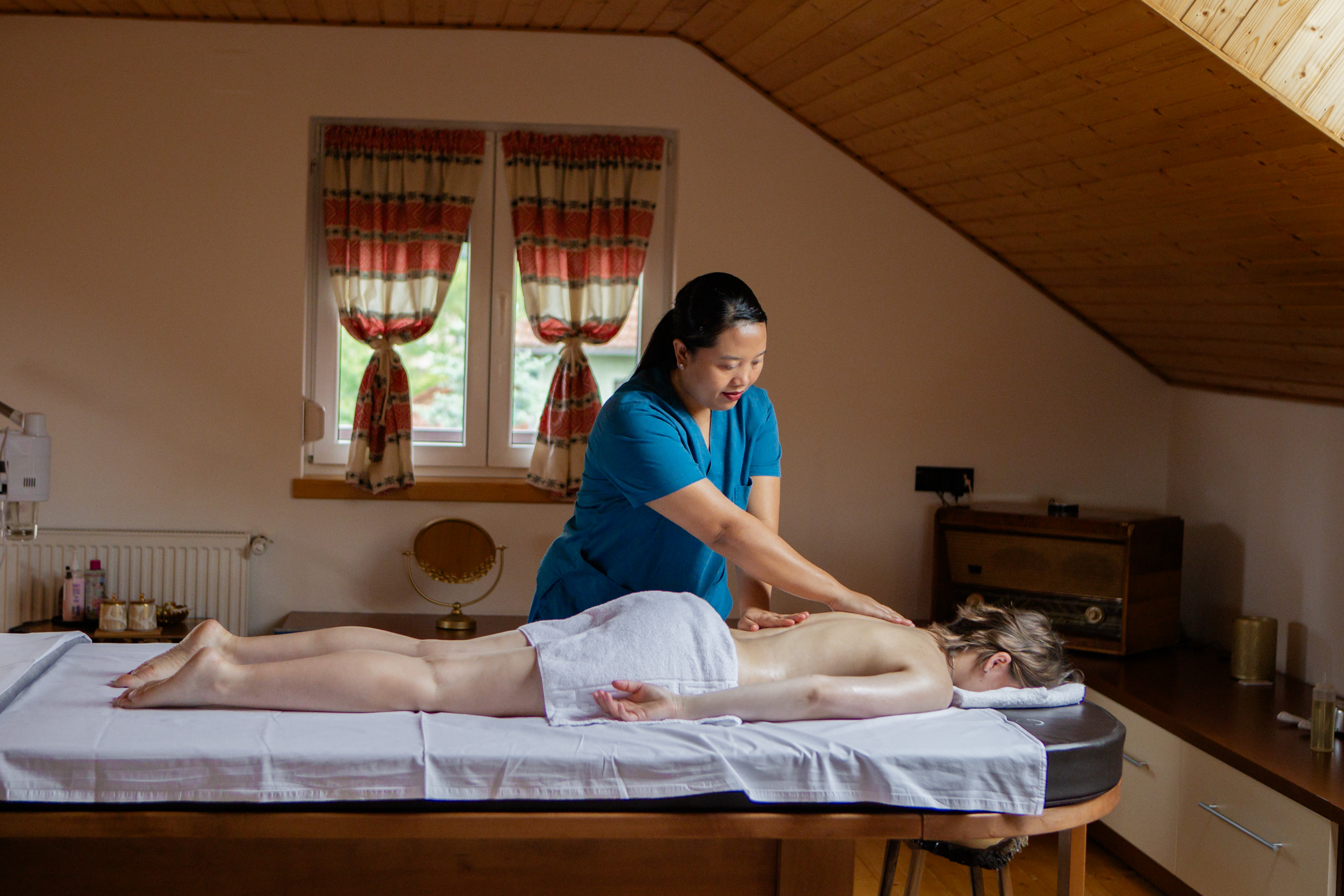
Massage has always been seen as an act of care and comfort. Whether it’s a mother instinctively stroking her child’s forehead, the sophisticated therapies of Ayurveda, or modern techniques validated by scientific research, the message is the same: touch heals.
Today, massage is no longer just an occasional indulgence; it is a recognized form of therapy, recommended both for physical health and emotional balance. Beyond the immediate feeling of relaxation, modern studies confirm real effects on stress hormones, the immune system, lymphatic circulation, and even mood.
And when we add to these findings the wisdom that traditions have intuited and practiced for thousands of years, we get a complete picture: massage is the bridge where science and tradition meet in the simplest and most natural act—touch.
Massage and the Neuroscience of Joy
One of the first effects you feel after a massage is that state of deep relaxation, as if someone had pressed the “pause” button inside you. But what actually happens in the body?
Research shows that massage stimulates the production of dopamine and serotonin — two neurotransmitters essential for well-being, joy, and motivation. At the same time, the level of cortisol, the stress hormone, decreases noticeably, bringing the body into a state of balance and calm. In practice, massage can gently yet effectively change the body’s internal chemistry.
A single 45-minute massage session can reduce cortisol by up to 30%, while serotonin and dopamine levels increase significantly.
(Journal of Alternative and Complementary Medicine)
Other studies confirm that massage has effects similar to guided meditation or mindful breathing: it induces a state of deep relaxation by activating the parasympathetic nervous system — the part responsible for rest, regeneration, and digestion.
In other words, when you lie down on the massage table and allow the therapist’s hands to touch you, you are not just receiving a pleasant sensation. You are receiving a true biochemical cocktail of joy and balance that shifts your mood, calms your mind, and restores your vital energy. It is as if every touch sends a message to the brain: “You can relax now. You are safe.”
Massage and the Lymphatic System
Another fascinating area where modern science has confirmed what ancient traditions have known for thousands of years is the lymphatic system. Unlike blood, which has its own “pump” — the heart — lymph has no internal propulsion mechanism. It circulates only through movement, deep breathing, and external stimulation such as massage.
This is where lymphatic massage comes in: through gentle, rhythmic, and directed movements, it supports lymph drainage, helping the body eliminate toxins, reduce inflammation, and restore vitality.
Studies show that manual lymphatic drainage can improve immune function, reduce edema, and even accelerate the healing process after surgery or trauma.
At the same time, this type of massage activates the parasympathetic nervous system — the body’s “relaxation button” — which supports the natural processes of detoxification and regeneration.
It is no coincidence that in Asian traditions massage was described as a method of “cleansing stagnant energies.” Today we know that this poetic expression has a real physiological counterpart: when lymph flows freely, the body feels lighter, cleaner, and more full of life.
The Tradition of Healing Touch
Although science is only beginning to thoroughly document all the benefits of massage, this form of therapy has been used since ancient times in almost every culture around the world. Touch, accompanied by the intention to heal, is one of the oldest “medicines” known to humanity.
- In Ayurveda, the Abhyanga massage, performed with warm oils, is considered not a luxury but a daily practice for maintaining health. The oils not only nourish and protect the skin, but also balance the doshas — the energetic constitutions of each individual — and support the flow of prana, the vital life force. In the Indian tradition, massaging your body is equivalent to honoring your life.
- In Traditional Chinese Medicine, techniques such as Tuina and acupressure have been used for thousands of years to release blockages and restore the flow of Qi energy. Where energy becomes blocked, illness appears; where it flows freely, the body regains balance. In this sense, massage becomes a form of preventive medicine, just as important as diet or breathing.
- In the Western tradition, massage has equally ancient roots. As early as ancient Greece, athletes were massaged before and after competitions to strengthen their endurance and recover their strength more quickly. Hippocrates, the father of medicine, recommended massage as a method for balancing the body and even as a treatment for various conditions.
No matter where we look — India, China, Greece, or other parts of the world — the message is the same: touch is the universal language of healing. It goes beyond words, beyond time and space. Within a single gentle touch lies comfort, safety, joy, and even hope.
Massage as a Balance Between Body and Emotions
Massage does not work only on a physical level. Beyond relaxing the muscles and stimulating circulation, it opens a subtle gateway to the emotional side of our being. During a session, gentle touch sends a simple yet profound message to the brain: “You are safe. You can relax.”
This message activates the release of oxytocin, often called the “hormone of love and emotional bonding.” It is the same hormone released when we hug someone dear, when mothers hold their children close, or when we receive a comforting touch. Oxytocin creates feelings of trust, closeness, and inner warmth — exactly what is often missing in a fast-paced and stressful world.
Studies show that massage can reduce anxiety and depression. In the case of cancer patients or people with anxiety disorders, regular massage sessions have improved mood and sleep quality while reducing feelings of isolation and fear.
In psychology, touch is considered one of the most fundamental forms of communication. Before we learned how to speak, we learned how to feel touch. Through massage, the body once again receives that ancestral message: “You are not alone. You are supported.”
In this way, massage becomes more than just a physical therapy. It turns into an emotional space of reconnection — a kind of embrace through the therapist’s hands. In those moments, not only the muscles relax, but the heart does as well. And perhaps this is one of the deepest powers of massage: the ability to heal through the simple magic of a conscious touch. ✨
Modern Perspectives: Massage in Integrative Medicine
If in the past massage was seen mostly as an act of indulgence or a traditional practice, today it has gained an important place in modern medicine as well. More and more hospitals and clinics include it in their care programs, recognizing that therapeutic touch provides benefits that complement conventional treatments.
- In the United States, the National Institutes of Health classifies massage as an effective complementary therapy, with visible results in reducing pain, anxiety, and stress. Massage is used both in rehabilitation clinics and in oncology or palliative care units, where it helps patients feel more relaxed and more connected to their own bodies.
- In Europe, lymphatic massage has become a standard treatment for Lymphedema (swelling of the limbs after surgery or radiotherapy) and is frequently used in post-operative recovery to speed up healing and reduce inflammation.
- Recent research also shows positive effects in chronic conditions such as Fibromyalgia, Arthritis, and persistent back and neck pain. Massage not only reduces pain, but also improves mobility and enhances patients’ quality of life.
This integration of massage into modern medicine confirms what traditional practices have long known: the body responds positively to touch. Beyond medication, procedures, or technology, human contact remains an essential element in the healing process.
Integrative medicine, which combines modern therapies with complementary approaches, no longer views massage as a “luxury,” but as a valuable therapeutic resource. And perhaps this is the beauty of this rediscovery: at last, science and tradition walk hand in hand for the well-being of people. ✨
Massage as a Self-Care Ritual
Beyond medical therapies or ancient traditions, massage can be a gift you offer to yourself — a small ritual of presence and daily care. You don’t always need a therapist or a special setting; sometimes it’s enough to give yourself a few minutes of mindful touch.
- A short self-massage in the morning, even if it lasts only two minutes, can awaken the body and activate circulation. A simple, gentle movement of the hands over the arms or legs can bring you energy and clarity.
- A gentle facial massage, especially around the jaw and forehead, releases the tension accumulated throughout the day and relaxes your facial features. It’s as if you are smoothing not only the skin, but also your thoughts.
- An abdominal massage, done in a clockwise motion, supports digestion and induces a deep sense of relaxation, helping you reconnect with your inner center.
These small gestures, when done with attention and intention, transform massage from an “occasional treatment” into a gentle self-care habit. It becomes a simple way to tell yourself every day: “I care about you. I give you time. I give you attention.”
Massage as a Meeting With Yourself
Beyond technique, massage is a form of coming home to your own body. We live so much in our minds—between lists, worries, and plans—that we often forget we have a body that carries us every single day. During a massage, gentle touch brings you back to the present and reminds you who you are: a living body, full of life, that deserves to be listened to, nourished, and respected.
You can see massage as a meditation through touch: each slow movement settles your mind, each breath aligns with the rhythm of the hands, and every muscle that softens reminds you that you don’t have to carry everything alone. It becomes a quiet dialogue between you and your body—a moment when you give yourself permission to be present, to feel, and to rest within yourself.
Perhaps this is the greatest gift of massage: it not only relaxes or heals, but helps you rediscover yourself—whole, peaceful, and full of life.
Touch as the Universal Language of Healing
Massage is not a whim or a luxury reserved for special occasions. It is a deep, fundamental need—for both body and soul. Our bodies carry memory, emotions, and accumulated tension, and touch is one of the simplest and most effective ways to release them.
Science confirms what we instinctively feel: massage lowers cortisol, the stress hormone, while increasing serotonin and dopamine—the chemicals that bring joy and clarity. It stimulates oxytocin, the bonding and trust hormone, and supports the lymphatic and immune systems, placing the body in a state of regeneration.
Traditions add their own wisdom: massage restores the flow of vital energy, balances, nourishes, and sustains vitality. It is a form of “medicine for the soul” that accompanies the body on its journey toward equilibrium.
Together, these modern and traditional perspectives tell us the same thing: touch heals.
Whether you choose a professional therapy, a traditional ritual, or a simple self-massage at home, every act of mindful touch sends the same message to yourself: “You matter. I see you. I am with you.”
Massage not only relaxes and releases tension but creates a sacred, intimate, and gentle space where you can reconnect with yourself. In the quiet of that moment, you realize that you are not just a tired body or a mind full of thoughts—you are a whole being, worthy of care, presence, and love.
If you feel the need for a relaxing pause but aren’t sure which type of massage suits you best, the article “How to Choose the Right Type of Massage” can guide you in this choice.